Skip to content

- Reviews
Hyperbaric Chamber (Review)
Hyperbaric Chamber Rating from Providers: 4.5 out of 5
Hyperbaric Chamber Rating from Patients: 4.0 out of 5
Want to see how MBC reviews are calculated? Click here.
Review Summary
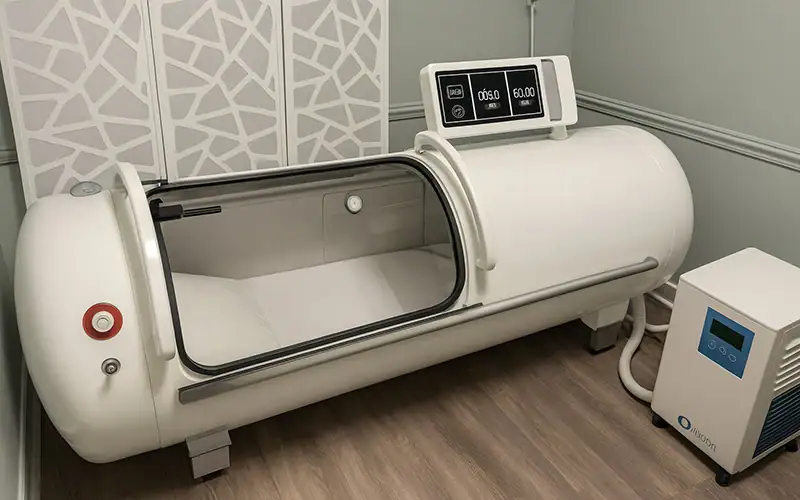
Hyperbaric chambers are designed to deliver hyperbaric oxygen therapy (HBOT), exposing patients to increased atmospheric pressure while they breathe oxygen. Within aesthetics and wellness settings, the technology is commonly used to support recovery, healing, swelling, and overall wellness.
But here’s the key insight:
The strongest real-world sentiment around hyperbaric chambers isn’t necessarily about dramatic transformation. It’s about recovery and how patients feel during or after a course of treatments.
Patients repeatedly described improvements in swelling, mental clarity, recovery, and overall well-being. Some were particularly enthusiastic about using hyperbaric chambers before or after cosmetic surgery and felt the treatments helped support their recovery.
At the same time, the experience can require a substantial time and financial commitment. Patients reported headaches, ear pressure, fatigue, anxiety inside the chamber, and benefits that were sometimes temporary or incomplete.
The sentiment is favorable, but expectations matter. Hyperbaric chambers appear to generate the strongest satisfaction when HBOT is viewed as a supportive therapy rather than a guaranteed solution for a specific concern.
Provider Praise
(Industry sentiment from Social Media, Facebook, Instagram & Forums)
From a provider standpoint, the strongest praise centers on recovery support, oxygen delivery, and the ability to incorporate hyperbaric chambers into broader wellness or post-procedure protocols.
Providers repeatedly noted that:
- hyperbaric chambers are used to support the body’s natural healing processes
- increased pressure is used to increase oxygen availability during treatment
- providers commonly position HBOT around recovery and wound-healing support
- chambers can be incorporated into broader wellness and recovery programs
- providers reported positive experiences adding chambers to their practices
- professional chambers were described as spacious and relatively easy to operate
- several clinic owners reported positive installation and aftercare experiences
The submitted provider sentiment is overwhelmingly positive.
For aesthetic practices specifically, the most relevant opportunity appears to be recovery support, particularly around procedures where swelling, tissue healing, and downtime are important parts of the patient experience.
Provider Complaints
(Industry sentiment from Social Media, Facebook, Instagram & Forums)
Negative provider sentiment was limited.
The most concrete criticism in the dataset related to operational support rather than the hyperbaric chamber itself. One provider reported receiving inadequate verbal instructions following chamber delivery and having difficulty obtaining the promised instruction manual.
There is, however, a larger credibility issue worth noting.
Several provider comments make extremely broad claims about HBOT, including statements around detoxification, stem cells, neurological conditions, infections, and other medical benefits. The submitted sentiment alone does not provide sufficient clinical evidence to validate those claims.
That distinction matters for aesthetic and wellness practices.
Positive provider enthusiasm should not be interpreted as evidence that every health or wellness claim associated with hyperbaric chambers is established or appropriate to market.
Patient Review
(Industry sentiment from Social Media, Facebook & Reddit)
Patient reviews were collected from first-person patient commentary describing experiences receiving hyperbaric oxygen therapy in hyperbaric chambers.
These reviews were scored independently from provider sentiment using the same methodology.
Patient Reviews: 4.0 out of 5 stars
What Patients Are Saying
Positive patient feedback focused primarily on mental clarity, recovery, swelling, and overall feelings of well-being.
Patients reported:
- improvement in brain fog or mental clarity
- reduced swelling during recovery
- positive experiences using HBOT around cosmetic surgery
- perceived improvements in healing after procedures
- feeling calmer or more relaxed
- improvements in pain or general recovery
- positive short-term effects following individual sessions
- willingness to complete longer treatment protocols after experiencing benefits
Post-surgical recovery was one of the more consistent themes relevant to aesthetic practices.
One patient strongly recommended HBOT before and after cosmetic surgery after using it around an extensive facelift. Another reported using three sessions following a tummy tuck and felt the treatments helped speed up the healing process.
Other patients described improvements in brain fog, swelling, pain, energy, and general recovery. Some reported feeling particularly clear-headed or relaxed for several hours following a session.
The overall patient pattern suggests that satisfaction is often less about a dramatic visible result from one session and more about how patients feel throughout a recovery or treatment process.
Not every experience was straightforward.
Patients also reported:
- ear pain and pressure
- temporarily reduced hearing or a blocked-ear sensation
- headaches following treatment
- chest pressure or difficulty taking a comfortable full breath
- fatigue after sessions
- anxiety or emotional discomfort inside the chamber
- difficulty committing to lengthy treatment protocols
- improvements that lasted only a few hours
- partial rather than complete improvement
Several patients also entered treatment expecting a much larger result than they ultimately experienced.
One patient reported improvement in brain fog but said HBOT did not resolve their fatigue and did not produce the complete recovery they had hoped for. Another described feeling fantastic for several hours after sessions while acknowledging that at least part of the effect appeared to be short-term.
That makes the patient story fairly clear:
HBOT may provide meaningful supportive benefits for some patients, but improvement should not automatically be interpreted as a cure or permanent result.
Cost Breakdown
The submitted dataset does not contain verified manufacturer pricing for hyperbaric chamber equipment acquisition.
One patient discussion estimated approximately $5,000–$7,000 for a full course of treatment in a hard-shell chamber, but this represents an individual report rather than verified standard pricing and should not be treated as an established treatment cost.
The dataset does not provide enough reliable information to calculate current chamber acquisition cost, installation expenses, maintenance and service costs, oxygen and operating expenses, average treatment price, or treatment-level profit margins.
Those costs should be independently evaluated before determining the overall business case.
From the sentiment provided, the business model appears particularly dependent on repeat sessions and treatment protocols rather than isolated visits, making treatment volume, protocol length, staffing requirements, space requirements, and repeat patient demand important considerations when evaluating potential ROI.
Final Verdict
From a provider perspective, hyperbaric chambers offer an interesting addition for practices focused on recovery, wellness, and supportive post-procedure care.
The strongest sentiment is not necessarily about one dramatic outcome. Instead, it centers on how patients feel during recovery: less swelling, improved mental clarity, perceived healing support, and an overall sense of improved recovery were recurring themes.
The patient experience, however, requires realistic expectations.
Best suited for:
- practices focused on recovery and wellness
- patients interested in supportive post-procedure care
- practices where longer treatment protocols fit naturally into the patient journey
- patients comfortable spending extended periods inside a pressurized chamber
- practices prepared to set realistic expectations about what HBOT can and cannot accomplish
Not ideal for: - patients expecting one session to produce dramatic results
- patients prone to significant ear-pressure discomfort
- practices relying on broad or poorly substantiated wellness claims to market treatment
- patients unwilling to commit to repeated sessions when recommended
Overall assessment: Hyperbaric chambers receive strong sentiment from both providers and patients, particularly around recovery, swelling, mental clarity, and general well-being. The limitations are equally important: treatment can be time-intensive, some patients experience pressure-related discomfort, headaches, anxiety, or fatigue, and improvements are not always complete or long-lasting.
For aesthetic practices, the strongest case for a hyperbaric chamber appears to be supporting and elevating the recovery experience rather than promising transformation on its own.
Leave Your Review
Latest Reviews
There are no reviews yet. Be the first one to write one.