Skip to content

- Reviews
Aura 3D imaging (Review)
Aura Rating from Providers: 4.6 out of 5
Aura Rating from Patients: 4.3 out of 5
Want to see how MBC reviews calculated? Click here.
Review Summary
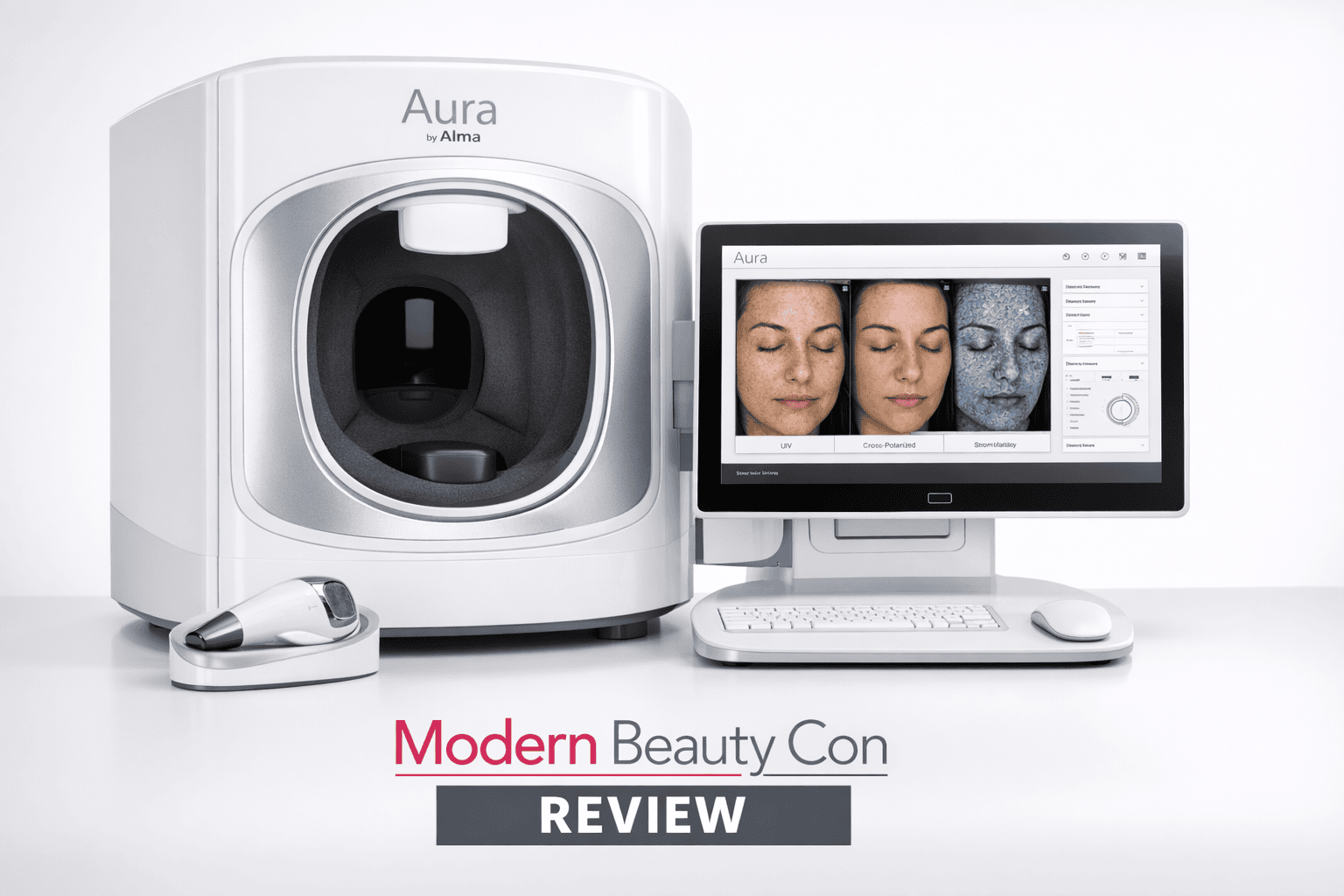
Aura does exactly what modern aesthetic clinics need from a skin analysis system: provide clear, visual skin diagnostics that support consultations and treatment planning. The device functions primarily as a consultation and education tool rather than a treatment platform.
But here’s the key insight:
Aura is most valuable as a conversion tool, not a revenue-generating device by itself.
Clinics that integrate it into consultations and treatment planning workflows report strong results.
Clinics expecting it to function as a standalone profit center tend to view it more as a supporting technology than a primary investment.
For official product specifications and manufacturer information, providers can review the product page:
Aura 3D Imaging System official website
The system captures a photo-realistic 3D digital twin of the patient’s face and neck, allowing practitioners to analyze skin texture, pigmentation, and facial structure in a single capture to support treatment planning and patient education.
Provider Praise for the Aura
(Industry sentiment from Social Media, Google & Reddit)
From a provider standpoint, the most frequently cited strength of Aura is its ability to visually demonstrate skin conditions to patients during consultations.
Providers repeatedly noted that:
-
The imaging helps patients understand underlying skin concerns
-
Visual reports improve consultation clarity
-
The device supports treatment planning discussions
Many providers described the system as a powerful educational tool. By displaying detailed images of pigmentation, texture issues, and underlying skin conditions, clinicians reported that patients are more receptive to recommended treatment plans.
Another commonly mentioned advantage was its impact on consultation efficiency. Providers stated that having objective imaging allows them to explain treatment needs quickly and clearly, which can improve patient confidence in recommended procedures.
Several providers also highlighted the device’s value in documenting baseline skin conditions, allowing clinics to track progress throughout treatment programs.
Provider Complaints About the Aura
(Industry sentiment from Social Media, Google & Reddit)
Negative and mixed feedback from providers was relatively limited and generally centered on operational expectations rather than clinical performance.
The most common complaints included:
-
The device does not directly generate treatment revenue
-
Some clinics felt it required workflow adjustments during consultations
-
Questions about ROI when patient volume is low
A few providers mentioned that while the technology is helpful during consultations, its value depends heavily on how effectively staff incorporate it into the consultation process.
Without consistent use, the system may become an underutilized tool rather than a core part of the clinic’s patient experience.
Importantly, even critical comments rarely questioned the device’s functionality or accuracy. Most concerns were tied to business integration rather than technical limitations.
Patient Reviews About the Aura
(Industry sentiment from Social Media, Google & Reddit)
Patient reviews were collected from first-person commentary across social media platforms, forums, and public discussions where individuals described their experiences undergoing skin analysis with the Aura system.
These reviews were scored using the same sentiment-based methodology applied to provider reviews.
Patient Sentiment Breakdown
Positive mentions: Clear skin imaging, helpful explanations during consultations, better understanding of skin concerns
Mixed mentions: Some uncertainty about how analysis results translate into treatments
Negative mentions: Occasional skepticism about whether results were necessary for treatment planning
Patient Reviews: 4.3 out of 5 stars
What Patients Are Saying
Patients who reported positive experiences frequently mentioned that the imaging helped them better understand their skin condition.
Common themes in positive feedback included:
-
Seeing detailed images of pigmentation or sun damage
-
Feeling more informed about treatment recommendations
-
Increased confidence in the provider’s assessment
Several patients also appreciated being able to track changes in their skin over time, particularly when undergoing multi-session treatments.
Mixed feedback occasionally reflected uncertainty about how the analysis translated into specific treatment recommendations.
Negative sentiment was relatively limited and generally focused on skepticism about whether the technology was necessary rather than dissatisfaction with the experience itself.
Overall, patient sentiment suggests the system enhances the consultation experience when used to explain treatment decisions clearly.
Aura Cost
Purchase Price: ~$8,000 – $20,000 depending on configuration
Consumable Costs: Minimal
Providers frequently referenced:
-
The device being positioned as a consultation tool rather than a treatment system
-
ROI depending on how often it is used during consultations
-
The importance of training staff to incorporate the technology into patient evaluations
Practices that consistently use skin analysis during consultations are more likely to view the device as a valuable operational tool.
Final Verdict
From a provider perspective, Aura is a consultation-focused skin analysis system that improves patient education and treatment planning rather than directly generating revenue.
Best suited for:
-
Clinics prioritizing structured consultations
-
Practices focused on personalized skincare and treatment planning
-
Providers looking to improve patient understanding of skin conditions
Not ideal for:
-
Buyers expecting direct treatment revenue
-
Clinics with very low consultation volume
-
Practices that do not integrate imaging into their consultation workflow
In practical terms, Aura functions best as a consultation enhancement tool that supports patient education, improves communication, and helps clinics visually demonstrate treatment needs.
Several patients also appreciated being able to track changes in their skin over time, particularly when undergoing multi-session treatments.
Mixed feedback occasionally reflected uncertainty about how the analysis translated into specific treatment recommendations.
Negative sentiment was relatively limited and generally focused on skepticism about whether the technology was necessary rather than dissatisfaction with the experience itself.
Overall, patient sentiment suggests the system enhances the consultation experience when used to explain treatment decisions clearly.
Leave Your Review
Latest Reviews
There are no reviews yet. Be the first one to write one.